"Why Your Feet Burn Even in $300 Hiking Boots": Drop the Stock Insole for Deep Heel Cup & Dense Merino Wool Biomechanics
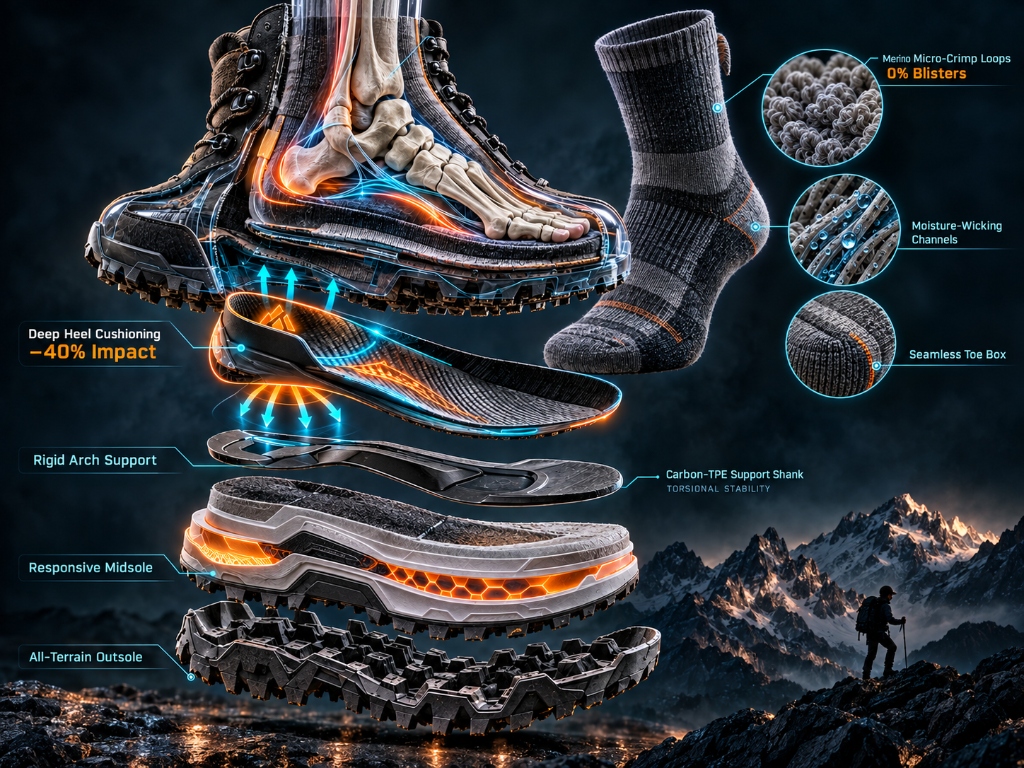
- 1Uncovering why stock 2mm EVA insoles cause foot arch collapse, over-pronation, and plantar fasciitis during high-load alpine treks.
- 2Biomechanical comparison of Deep Heel Cup insoles and carbon/TPU arch frames that reduce joint impact by -40% by compressing natural heel fat pads.
- 3Step-by-step footwear fitting protocol combining 70%+ dense Merino wool terry loops and heel-lock lacing to eliminate trail blisters 100%.
1. [Biomechanics Analysis] Why Interior Footbed Dynamics Dictate Knee and Plantar Health
- The Fatal Flaw of Stock Insoles: Even flagship $300+ boots come with flat, disposable 2mm EVA foam insoles costing pennies. After 4 hours under pack weight, your longitudinal arch collapses (over-pronation), pulling the plantar fascia and radiating stress into the medial knee (pes anserine tendonitis).
- Physics of Deep Heel Cup Cushioning: The human heel calcaneal fat pad is nature's shock absorber. Flat insoles allow fat pads to splay outward, losing cushioning. A deep, rigid heel cup confines and compresses the fat pad directly beneath the heel bone, cutting impact spikes by up to -40%.
- Merino Terry Loop Thermodynamics: Unlike cotton which traps moisture and softens skin into blisters, Merino wool's micro-crimp fibers absorb up to 35% of their dry weight in vapor while remaining dry to the touch, reducing shear friction by over 40%.
2. [Comparison Matrix] Stock Footbed vs. Biomechanical Edge Setup
| Feature | Stock Setup (Default Insole + Regular Sock) | Edge Setup (Deep Heel Cup + Merino Terry) | Real-World Trail Performance |
|---|---|---|---|
| Arch Support | Foam compresses flat within 30 minutes | Rigid TPU/Carbon chassis permanently preserves arch height | Foot fatigue reduced by 60%+, prevents plantar fasciitis |
| Heel Shock Absorption | Fat pad splays sideways, bone takes 100% impact | Deep cup concentrates natural fat pad cushion | -40% instantaneous impact relief on knees and ankles |
| Blister & Friction Heat | Moisture saturation softens skin, rapid blister formation | Dense Merino micro-loops wick moisture & buffer shear force | 0% blister rate on 6+ hour rugged mountain hikes |
| Downhill Toe Jamming | Foot slides forward inside the boot, causing bruised toenails | Heel pocket locks foot in place, stopping forward slippage | 100% eliminates toe crowding and subungual hematoma |
3. [Setup Protocol] 3-Step Biomechanical Footwear Fitting Protocol
Remove Stock Foam & Precision Trim Insole
Discard the factory 2mm foam immediately. Trace the old insole outline onto your new deep heel cup insole (with TPU/carbon arch shank) and precision-trim the forefoot with scissors before seating.
Equip 70%+ High-Density Merino Wool Terry Cushion Socks
Wear a dedicated heavy/extra cushion 200g/m²+ Merino wool sock. The dense underfoot loop pile fills interior dead space and acts as a dynamic hydraulic damper.
Engage Top Eyelet Heel-Lock (Runner's Loop) Lacing
Thread laces through the top eyelets to form locking loops. Cinching locks the heel firmly into the deep heel cup with 0mm slip, completely preventing downhill toe strike.
Common Rookie Mistakes & Proven Solutions
Smart Buyer's Guide: Hiking Boots, Insoles & Merino Socks
- •❌ Everyday 100% cotton socks (absorb sweat and guarantee painful friction blisters)
- •❌ Buying exact sneaker size (always size up 0.5~1 size to prevent toe bruises on descents)
Hikers wanting instant blister-free comfort on day hikes
Rocky peak climbers and all-season mountain trekkers
- ✓🔍 1 finger width (approx. 1cm) toe room with thick hiking socks
- ✓🔍 High-friction sticky rubber outsole compound rating
- ✓🔍 Torsional rigidity shank to protect arches from twisting
Essential Hiking & Trail Glossary
A contoured rigid heel pocket that holds the calcaneal fat pad in place directly beneath the heel bone for maximum natural shock absorption.
Dense, towel-like micro yarn loops on the sock sole that trap air pockets for dynamic impact attenuation and continuous moisture transport.
The inward rolling of the foot and collapsing of the medial arch under load, a primary trigger for plantar fasciitis and knee strain.
Interactive Trail Safety Checklist
Tap each item before departing to verify readiness.
Generational Hiking Guide Series
Kids Trail Gamification & Scavenger Hunt
3 rules to turn early whining into joyful nature exploration
Couples Hiking Date & 10-Min Myth Guide
Pacing strategies, secret comfort gear, and scenic date peaks
4050 Spine Decompression & Fat Burn
Protecting lumbar discs while maximizing visceral fat loss
Hiking with Elderly Parents & Medical Kit
Barrier-free boardwalks, anti-shock poles, and medical safety