"Are Socks More Important Than Hiking Boots?": 4 Reasons Cotton Socks Cause Blisters & How to Pick Technical Hiking Socks
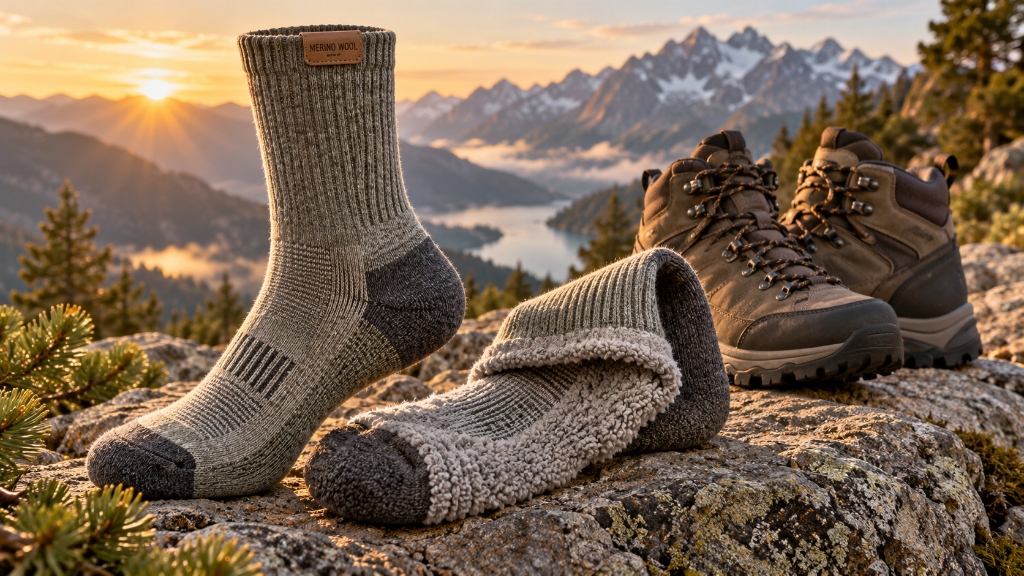
- 1Why standard cotton socks get saturated with sweat within 1 hour, causing skin maceration and severe trail friction blisters.
- 2How high-density 'Terry Loop Cushioned Soles' act as hydraulic shock absorbers to protect heels and stop burning footbed fatigue.
- 3Interior volume fitting hacks: Eliminating dead space inside roomy boots to prevent downhill bruised toenails and collar chafing.
1. [Trail Analysis] Regular Cotton vs. Technical Hiking Socks
- 0% Blister Prevention (Moisture Transport & Reduced Friction): Cotton traps moisture and cannot vaporize sweat, turning into a wet rag. Macerated skin increases friction by 300%, causing blisters within 2 hours. Merino wool and synthetic fibers continuously wick vapor away, keeping skin dry.
- Natural Shock Absorption (Underfoot Terry Loops): Dense, towel-like looped pile cushioning under the heel and forefoot dampens repetitive impact from rocky steps, protecting knee joints.
- Eliminating Boot Dead Space (Bruised Toenail Prevention): Hiking boots sized 5-10mm larger require plush sock volume to secure the foot, preventing forward slippage and bruised black toenails on steep descents.
- Achilles & Ankle Collar Chafing Protection: Shields the delicate skin around the ankle bone and Achilles tendon from rubbing directly against stiff boot collars.
2. [Comparison Matrix] Everyday Sports Socks vs. Technical Hiking Socks
| Feature | Regular Cotton / Thin Sports Socks | Technical Cushioned Hiking Socks | Real-World Trail Advantage |
|---|---|---|---|
| Moisture Wicking & Drying | Stays soggy, causing skin softening | Pushes moisture outward, stays dry | 0% blister risk on 4+ hour treks |
| Underfoot Shock Dampening | Thin; rock impact radiates to bone | Integrated 3D high-density terry loops | 50%+ reduction in sole burning and heel fatigue |
| Boot Interior Precision Fit | Loose; foot slides forward on descents | Plush volume locks foot firmly in place | 100% prevents toe jamming and bruised toenails |
| Ankle Height & Protection | Ankle/no-show (debris enters shoe) | Mid-calf Crew height past boot collar | Blocks collar friction and thorny bramble scrapes |
3. [Buyer's Guide] 3 Golden Rules for Choosing Hiking Socks
Fabric: Choose 60%+ Merino Wool Blends
Merino wool is naturally thermoregulating (cool in summer, warm in winter) and naturally odor-resistant. Breathable Coolmax/nylon blends are also great for humid summers.
Cushion: Select Medium to Heavy Underfoot Pile
Ensure the sock features thin breathable ventilation mesh over the instep and thick terry-loop padding beneath the sole and heel for balanced cushioning and airflow.
Height: Pick Crew Length Extending 5cm+ Above Boot Collar
Never wear no-show or low-ankle socks. Crew height ensures complete collar chafing protection and seals out dirt and pebbles.
Common Rookie Mistakes & Proven Solutions
Smart Buyer's Guide: Hiking Boots, Insoles & Merino Socks
- •❌ Everyday 100% cotton socks (absorb sweat and guarantee painful friction blisters)
- •❌ Buying exact sneaker size (always size up 0.5~1 size to prevent toe bruises on descents)
Hikers wanting instant blister-free comfort on day hikes
Rocky peak climbers and all-season mountain trekkers
- ✓🔍 1 finger width (approx. 1cm) toe room with thick hiking socks
- ✓🔍 High-friction sticky rubber outsole compound rating
- ✓🔍 Torsional rigidity shank to protect arches from twisting
Essential Hiking & Trail Glossary
Ultra-fine natural wool fiber that is non-itchy, highly breathable, and absorbs up to 35% of its weight in vapor while remaining dry to the touch.
A looped yarn knitting technique on sock soles that creates an air-trapping cushion for impact reduction.
Standard mid-calf sock height designed to extend comfortably above high-cut and mid-cut hiking boot collars.
Interactive Trail Safety Checklist
Tap each item before departing to verify readiness.
Generational Hiking Guide Series
Kids Trail Gamification & Scavenger Hunt
3 rules to turn early whining into joyful nature exploration
Couples Hiking Date & 10-Min Myth Guide
Pacing strategies, secret comfort gear, and scenic date peaks
4050 Spine Decompression & Fat Burn
Protecting lumbar discs while maximizing visceral fat loss
Hiking with Elderly Parents & Medical Kit
Barrier-free boardwalks, anti-shock poles, and medical safety