“Severe Back Pain & Stubborn Belly Fat After Hiking?” The 4050 Spine Decompression & Zone 2 Fat-Burn Guide
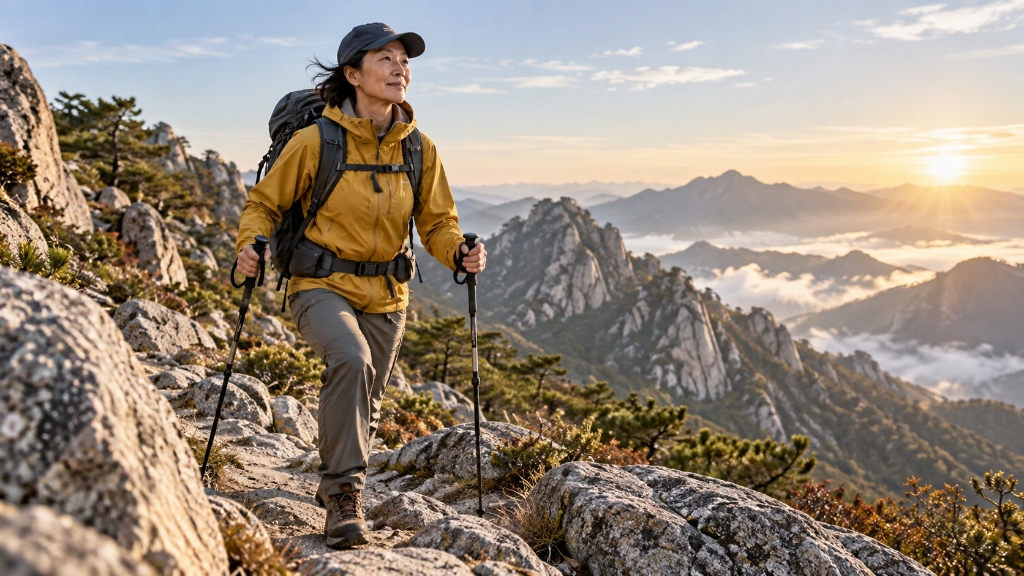
- 1Analyzes the biomechanics of uphill slouching, where leaning forward exerts 4x bodyweight shear stress onto L4-L5 lumbar discs.
- 2Presents the 3 Spine Decompression Rules: the 'Core-Lock' posture (drawing the navel 1cm inward) and 'Glute Drive' propulsion.
- 3Comprehensive guide to Zone 2 heart rate cadence for maximizing visceral fat oxidation, lumbar support packs, and BCAA recovery.
1. [Biomechanics Facts] Why Do Weekly Mountain Climbs Cause Lumbar Pain Without Losing Belly Fat?
- Forward Leaning (Kyphosis) Spinal Damage: Slouching forward over 30° on climbs shifts upper body mass forward, overloading erector spinae muscles and exerting 4x bodyweight shear stress directly onto L4-L5 lumbar discs.
- Over-Pacing Glycogen Trap: Panting at heart rates above 160bpm burns only blood glucose (glycogen) instead of fat, triggering severe rebound post-hike binge eating.
- Post-Hike Calorie Backlash: A 3-hour hike burns ~800kcal, but celebratory drinks and greasy pancakes after the descent easily exceed 1,500kcal, storing excess visceral fat.
2. [Comparison Matrix] Disc-Damaging Slouching vs 4050 Spine-Aligned Core Hiking
| Comparison Metric | Back-Pain Inducing Posture | Spine-Decompressing Core Hiking |
|---|---|---|
| Torso Angle | Hunched forward staring at the ground | Upright posture with neutral 5° slight forward lean |
| Core Tension | Belly pushed out, resting on spine | Navel drawn 1cm inward for Intra-Abdominal Pressure (IAP) |
| Propulsion Muscle | Overusing front quadriceps | Driving through gluteus maximus and hamstrings (Glute Drive) |
| Pack Load Distribution | 100% on shoulders, crushing traps | 80% seated firmly on iliac crest via lumbar hip belt |
| Cardio Cadence | Gasping for air, unable to talk (Zone 4) | Nasal breathing, able to hold full conversation (Zone 2) |
3. [Step-by-Step Protocol] The 3 Rules for Protecting Lumbar Discs & Melting Visceral Fat
The 'Core-Lock' Posture (Navel 1cm Inward)
Lift your chest and gently draw your navel 1cm toward your spine. This activates the transverse abdominis, creating a natural internal belt protecting L4-L5 discs.
Propel with 'Glute Drive' Kicks
Instead of lifting with your thighs, press firmly through your back heel, squeezing your glutes to push your hips upward on every ascending step.
Maintain Zone 2 Fat-Burning Heart Rate
Keep your pulse between (220 - age) × 0.65~0.75 (approx. 115-130bpm) using a 2:2 nasal breathing cadence to maximize direct fatty acid oxidation.
4. [Pro Nutrition Tips] Preventing Muscle Loss & Post-Hike Recovery
- Drink BCAA amino acids or whey protein within 30 minutes of descent to stop age-related muscle breakdown and accelerate lactic acid clearance.
- Choose high-protein post-hike meals like steamed pork, tofu, or grilled fish rather than high-calorie fried foods and heavy alcohol.
- Roll a tennis ball or foam roller under your glutes and foot arches for 5 minutes at home to eliminate next-day lower back stiffness.
Common Rookie Mistakes & Proven Solutions
Smart Buyer's Guide: 4050 Lumbar Support & Core Trail Gear
- •❌ Packs with thin webbing hip straps (transfers 100% of weight directly onto the lower spine)
- •❌ Tight compression back corsets on trail climbs (atrophies natural core stabilizers and restricts breathing)
Middle-aged hikers experiencing post-hike back stiffness and leg fatigue
Active 4050 hikers aiming for regular multi-peak traverses and body fat reduction
- ✓🔍 Pack: Thick 3D lumbar pad & padded conical hip belt hugging the iliac crest
- ✓🔍 Insole: Ortholite deep heel cup correcting ankle pronation and spinal alignment
- ✓🔍 Supplement: 2:1:1 ratio of L-Leucine, Isoleucine, and Valine BCAA
Essential Hiking & Trail Glossary
Internal pressure created by engaging the transverse abdominis, acting as a natural internal brace that reduces spinal disc load by over 50%.
The aerobic cardio zone (60-70% of max HR) that maximizes direct mitochondrial fat oxidation without accumulating fatiguing lactic acid.
An ergonomic cushion integrated into hiking pack backpanels that supports the natural lordotic curve of the lower spine.
Recommended Korea Mountains for this Guide
Dobongsan (Dobongsan)
Gradual ascending stone paths ideal for practicing Glute Drive propulsion and Zone 2 pacing
Gyeryongsan (Gyeryongsan)
Nammaetap circuit with steady aerobic gradients perfect for visceral fat burn workouts
Geumjeongsan (Geumjeongsan)
Gentle ridgeline fortress paths ideal for steady long-distance middle-aged endurance hikes
Interactive Trail Safety Checklist
Tap each item before departing to verify readiness.
Generational Hiking Guide Series
Kids Trail Gamification & Scavenger Hunt
3 rules to turn early whining into joyful nature exploration
Couples Hiking Date & 10-Min Myth Guide
Pacing strategies, secret comfort gear, and scenic date peaks
4050 Spine Decompression & Fat Burn
Protecting lumbar discs while maximizing visceral fat loss
Hiking with Elderly Parents & Medical Kit
Barrier-free boardwalks, anti-shock poles, and medical safety