"A 10kg Pack Crushing Your Shoulders Isn't a Fitness Issue": C7 to Iliac Crest Torso Fitting & 45° Load Lifter Physics Transferring 80% Weight to Hips
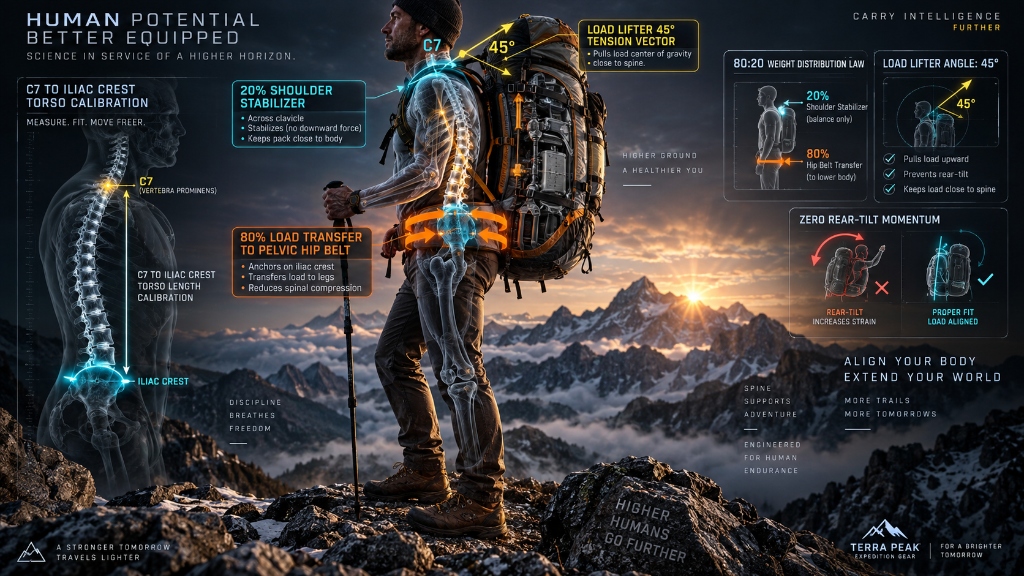
- 1Biomechanical analysis of trapezius nerve impingement, brachial plexus compression, and backward torque caused by improper backpack torso length mismatch.
- 2Precision measurement protocol from the C7 cervical vertebra to the pelvic iliac crest with accurate S/M/L frame sizing rules.
- 34-step sequential harness adjustment protocol using a 45° load lifter tension vector to shift 80% of pack weight off the shoulders onto the pelvic girdle.
1. [Biomechanics Analysis] Why Hips Must Bear the Load Instead of Shoulders
- Neurological Risk of Trapezius Compression: When 10kg+ compresses the brachial plexus nerves running over the clavicle, it causes finger numbness, neck stiffness, and chronic trapezius spasm. Shoulder straps must serve solely as 20% lateral stabilizers to keep the pack close.
- Physics of Pelvic Iliac Crest Load Bearing: The human pelvis and femur are engineered to carry multi-times body weight. Seating the hip belt padding centered directly over the iliac crest transfers 80%+ of pack weight directly into the lower skeletal frame, completely bypassing the spinal column.
- The 45° Load Lifter Tension Vector: Load lifter straps connecting the upper shoulder harness to the pack frame must maintain a 40° to 50° angle. This pulls the pack's center of gravity 2-3cm closer to the spine, completely neutralizing rear-tilt momentum.
2. [Comparison Matrix] Improper Fit vs. 80:20 Biomechanical Golden Ratio
| Fitting Feature | Improper Setup (Torso Mismatch) | 80:20 Golden Fit (C7-Iliac Match + 45° Lifter) | Real-World Trail Benefit |
|---|---|---|---|
| Load Distribution | 70% Shoulders : 30% Hips (Crushing down) | 20% Shoulders : 80% Hips (Leg supported) | 80% reduction in trapezius fatigue and shoulder collarbone pain |
| Backpack Backpanel Contact | Gaps along spine or bottom hits tailbone | Seamless anatomical contact along spine S-curve | 0% lower back disc compression during 6+ hour treks |
| Load Lifter Angle | 0° horizontal or sloping backward (<30°) | Crisp 45° upward and forward tension | 100% eliminates backward sag and pack sway torque |
| Sternum Strap Position | Chokes throat or presses upper clavicle | Positioned 3-5cm below clavicle (armpit level) | Secures harness width without restricting thoracic lung expansion |
3. [Setup Protocol] 4-Step Protocol to Make Packs Feel 50% Lighter
Loosen All Straps & Anchor Pelvic Hip Belt First
Put on the loaded pack with all straps loose. Center the padded hip belt 50:50 over the top crest of your pelvic bone (iliac crest) and buckle tightly.
Snug Shoulder Straps Down and Back
Pull shoulder strap tails downward and backward just enough to bring the pack flush against your back without bearing vertical weight on the collarbones.
Cinch Load Lifters to a Crisp 45° Angle
Tighten the top load lifter straps until they form a 45-degree angle, drawing the pack's center of mass forward against your spine.
Fasten Sternum Strap 3cm Below Clavicle
Adjust sternum strap height across the mid-chest and buckle lightly to keep shoulder straps centered while maintaining full breathing freedom.
Common Rookie Mistakes & Proven Solutions
Smart Buyer's Guide: Ergonomic Backpack & Fit Systems
- •❌ Day packs without padded hip belts (forces 100% of load onto delicate shoulders)
- •❌ Overkill 50L+ heavy pack for standard single-day excursions
Day hikers on 3-6 hour regional trails
All-season summit baggers and hut-to-hut trekkers
- ✓🔍 Adjustable Torso Length system matching your back
- ✓🔍 Ergonomic hip belt capable of carrying 70% of pack weight on hips
- ✓🔍 Easily accessible hip-belt zip pockets and stretch water bottle holders
Essential Hiking & Trail Glossary
The vertical anatomical distance measured from the prominent C7 cervical vertebra at the base of the neck down to the horizontal line connecting the tops of the iliac crests.
The curved upper ridge of the pelvic bone that serves as the primary load-bearing shelf for 80% of expedition backpack weight.
Upper harness tension straps configured at a 45° angle to pull the pack's upper center of mass forward against the hiker's thoracic spine.
Interactive Trail Safety Checklist
Tap each item before departing to verify readiness.
Generational Hiking Guide Series
Kids Trail Gamification & Scavenger Hunt
3 rules to turn early whining into joyful nature exploration
Couples Hiking Date & 10-Min Myth Guide
Pacing strategies, secret comfort gear, and scenic date peaks
4050 Spine Decompression & Fat Burn
Protecting lumbar discs while maximizing visceral fat loss
Hiking with Elderly Parents & Medical Kit
Barrier-free boardwalks, anti-shock poles, and medical safety