"Burned Out in 10 Minutes Uphill? Read This": The 0.5-Second Mountaineering 'Rest Step' & Rhythmic 2:2 Breathing Formula
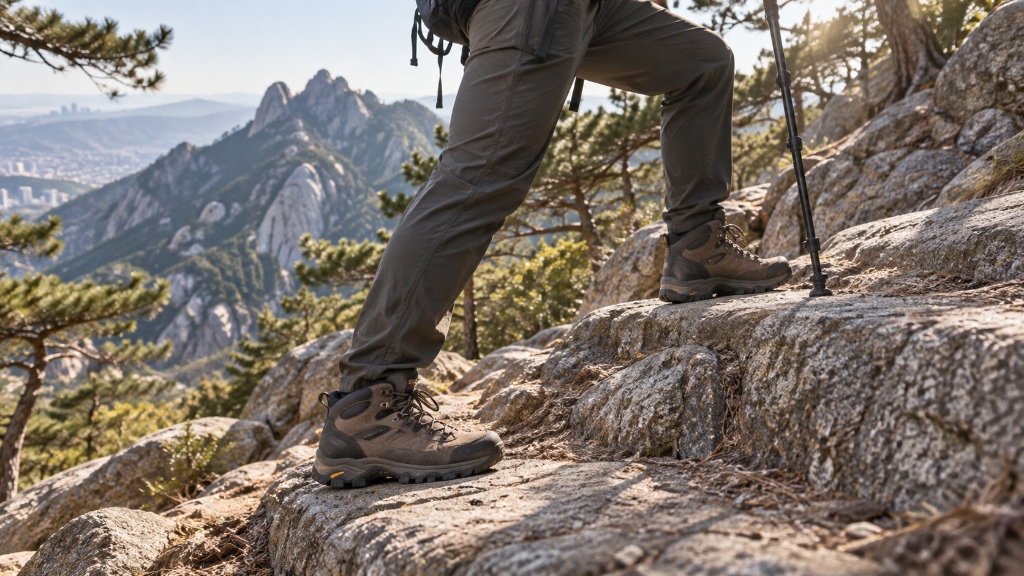
- 1Explains the biomechanical reasons why beginner and intermediate hikers experience quadriceps burnout and elevated heart rates within 15 minutes of climbing.
- 2Introduces the Himalayan 'Rest Step' technique: Locking the rear knee on every stride to support weight on the skeletal frame and relax quads for 0.5 seconds.
- 3Details the '2:2 Nasal-Inhale / Oral-Exhale Rhythmic Breathing Protocol' to prevent hyperventilation and muscle oxygen starvation.
1. [Biomechanical Analysis] Why Do Your Thighs Burn and Lungs Burst on Climbs?
- The Limits of Muscle-Dependent Stepping: Stepping with bent knees forces the quadriceps into continuous contraction throughout the climb, squeezing capillaries, blocking blood flow, and triggering rapid lactic acid accumulation.
- The Magic of the 0.5-Second Bone Lock: Locking the rear knee straight on each step transfers body weight entirely onto the skeletal bone column, allowing front leg muscles to disengage, recover, and receive oxygen for 0.3 to 0.5 seconds per step.
- The Trap of Mouth Panting (Hyperventilation): Panting with an open mouth dumps carbon dioxide too fast, triggering the 'Bohr Effect' where hemoglobin clings to oxygen instead of delivering it to working muscle tissue.
2. [Comparison Matrix] Standard Uphill Walking vs. The Rest Step
| Parameter | Standard Beginner Pace | The Rest Step Technique | Biomechanical Benefit |
|---|---|---|---|
| Weight Support Mechanism | Bent front leg quadriceps muscles | Straight rear leg skeletal bone pillar | Over 40% reduction in muscle fatigue |
| Stride & Foot Strike | Long strides (50-60cm) on tiptoes | Short strides (20-30cm) with full flat foot | Zero calf cramping & joint protection |
| Muscle Rest per Step | 0 seconds (Constant muscle tension) | 0.3 to 0.5 seconds full relaxation | Maintains steady pace for 2-3 hours straight |
| Breathing Rhythm | Erratic mouth panting (HR 170+ bpm) | 2:2 cadence-synced nose-mouth breathing | Eliminates lactate spike & regulates oxygen |
3. [Action Protocol] 3-Step Guide to Conquering Steep Inclines Effortlessly
Shorten Stride by Half & Plant Whole Sole (Flat Footing)
Large strides exponentially increase torque load on hips and quads. Shorten your step to 1 to 1.5 shoe lengths and plant your entire sole flat onto rocks or stairs.
Lock Rear Knee Straight for a 0.5s Bone-Support Pause
As you step forward, straighten the rear leg completely so your skeletal frame holds the load. Relax the front thigh muscle for half a second before shifting weight.
Synchronize 2-Step Inhale through Nose + 2-Step Exhale through Mouth
Match your cadence: Inhale deeply through your nose for 2 paces ('In-In'), then purse your lips and exhale firmly for 2 paces ('Out-Out') to flush CO2.
Common Rookie Mistakes & Proven Solutions
Smart Buyer's Guide: Emergency Safety & Essential Gear
- •❌ Relying solely on smartphone flashlight (drains battery and occupies hands)
- •❌ Pea-whistles with moving balls (freezes or jams with moisture during emergencies)
Essential safety setup for every day hiker
Sunrise/sunset chasers and all-season mountain trekkers
- ✓🔍 Headlamp with verified ANSI-FL1 lumen and runtime ratings
- ✓🔍 Pealess high-decibel whistle operable in wet/freezing conditions
- ✓🔍 Tear-resistant aluminum emergency thermal blanket (sub-50g)
Essential Hiking & Trail Glossary
A mountaineering gait technique where the rear leg knee is locked straight on each pace to bear body weight on bones, momentarily relaxing leg muscles.
Planting the entire surface of the boot outsole onto the ground rather than just the edges or toes, maximizing grip and joint balance.
A physiological phenomenon where excessively low blood CO2 levels from hyperventilation prevent hemoglobin from releasing oxygen to muscle tissues.
60-70% of maximum heart rate, where the body primarily metabolizes fat with minimal lactic acid accumulation for sustained endurance.
Interactive Trail Safety Checklist
Tap each item before departing to verify readiness.
Generational Hiking Guide Series
Kids Trail Gamification & Scavenger Hunt
3 rules to turn early whining into joyful nature exploration
Couples Hiking Date & 10-Min Myth Guide
Pacing strategies, secret comfort gear, and scenic date peaks
4050 Spine Decompression & Fat Burn
Protecting lumbar discs while maximizing visceral fat loss
Hiking with Elderly Parents & Medical Kit
Barrier-free boardwalks, anti-shock poles, and medical safety