"Eliminate Instep Pain by Changing How You Tie Your Laces": Window Lacing for High Insteps & Heel-Lock for Downhill Bruised Toenails
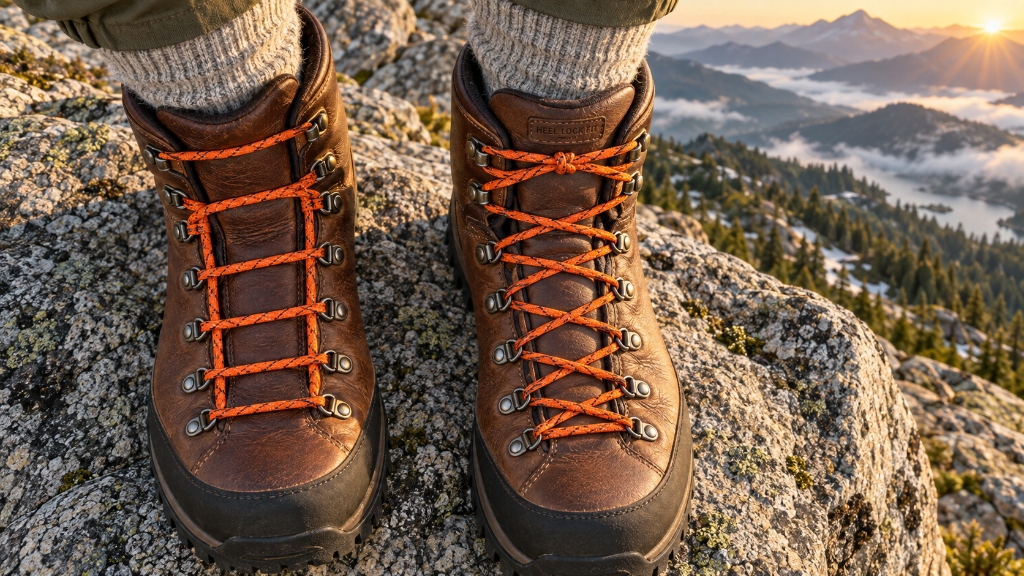
- 1Why standard criss-cross lacing pinches the high instep bone and how 'Window (Box) Lacing' eliminates pressure points completely.
- 2Biomechanical physics of the 'Heel-Lock Runner's Loop' knot that anchors heels firmly into the rear pocket to stop downhill toe strike.
- 32-zone tensioning strategy: Maintaining flexible ankle mobility on climbs vs. maximum rigid lock on steep descents.
1. [Lacing Science] Solving Instep Pain and Bruised Toenails via Tension Architecture
- Relieving High Instep Pressure (Window Lacing): Hikers with high insteps suffer when standard criss-cross laces crush the navicular/cuneiform bones. Skipping cross-overs and threading laces vertically creates a pressure-relief 'window' while preserving total boot lockdown.
- Stopping Downhill Toe Strike (Heel-Lock Loop): Steep descents cause feet to slide forward, bruising toenails against the rigid toe box. Threading through top eyelet loops creates rearward clamping force, locking the heel with 0mm slip.
- 2-Zone Differential Tensioning: Using center locking hooks to separate forefoot tension from ankle cuff tension allows effortless calf mobility on climbs and rock-solid ankle support on descents.
2. [Comparison Matrix] Boot Lacing Techniques by Footwear Symptom
| Foot Pain / Symptom | Recommended Lacing Tech | Knot Architecture | Real-World Trail Benefit |
|---|---|---|---|
| Aching / Pinched Instep Bone | Window Lacing (Box Lacing) | Skips diagonal cross-overs; runs laces vertically | 100% eliminates instep pressure and nerve numbness |
| Downhill Toe Jamming / Black Toenails | Heel-Lock Runner's Loop | Creates cinch loops at top eyelets to anchor heel | 0% forward foot sliding on steep descents |
| Wide Forefoot Pinching | Wide-Toe Lacing | Runs laces parallel through the bottom 1-2 eyelets | Expands toe box volume and prevents pinky blisters |
| Tight Calf on Steep Climbs | Surgeon's Knot | Double-twist knot below ankle to isolate zones | Preserves Achilles tendon flex & reduces calf strain |
3. [Setup Protocol] 3-Step Trail Lacing Protocol
Pre-Hike: Tap Heel on Ground to Seat in Heel Pocket
After slipping boots on, tap your heel lightly on the ground 2-3 times to seat your calcaneus firmly against the rear heel counter before lacing.
Skip Pain Points Vertically with Window Lacing
Where the lace presses painfully on your instep bone, thread straight up to the next eyelet without crossing diagonals to leave an open pressure-relief window.
Summit Check: Re-cinch with Heel-Lock Before Descent
Before descending from the summit, unlace the top collar and engage the Heel-Lock knot to lock your foot rearward against gravity.
Common Rookie Mistakes & Proven Solutions
Smart Buyer's Guide: Hiking Boots, Insoles & Merino Socks
- •❌ Everyday 100% cotton socks (absorb sweat and guarantee painful friction blisters)
- •❌ Buying exact sneaker size (always size up 0.5~1 size to prevent toe bruises on descents)
Hikers wanting instant blister-free comfort on day hikes
Rocky peak climbers and all-season mountain trekkers
- ✓🔍 1 finger width (approx. 1cm) toe room with thick hiking socks
- ✓🔍 High-friction sticky rubber outsole compound rating
- ✓🔍 Torsional rigidity shank to protect arches from twisting
Essential Hiking & Trail Glossary
A specialized lacing pattern that runs laces parallel instead of crossing over specific sensitive areas to relieve localized pressure.
A lacing technique utilizing top eyelet loops to generate downward and backward tension, locking the heel firmly into the boot's heel counter.
A double-twist friction knot that locks lower lace tension in place, allowing independent upper collar adjustment.
Interactive Trail Safety Checklist
Tap each item before departing to verify readiness.
Generational Hiking Guide Series
Kids Trail Gamification & Scavenger Hunt
3 rules to turn early whining into joyful nature exploration
Couples Hiking Date & 10-Min Myth Guide
Pacing strategies, secret comfort gear, and scenic date peaks
4050 Spine Decompression & Fat Burn
Protecting lumbar discs while maximizing visceral fat loss
Hiking with Elderly Parents & Medical Kit
Barrier-free boardwalks, anti-shock poles, and medical safety