Loading Mountain Details
Fetching live weather forecasts & trail safety status...
A representative Korean peak certified for its high scenic beauty and historical hiking significance.
Check real-time weather and safety status for Unjangsan Mountain. We provide wind speed, precipitation, temperature, trail courses, and transport info to help plan your hike.
Embracing fertile plains and highly picturesque valleys, Unjangsan Mountain (1125.8m) is truly magnificent in the entire landscape blazes with red maple leaves in October. Climbing past the tranquil temple courtyard leads to an immense view. A feast of bamboo tube rice with pan-fried flatbed cockles afterward completes the journey.
”There is Daebulcheon Valley, which is famous for Unilam and Banilam. It was selected considering the fact that it has clear water, is surrounded by rock walls and forests, has beautiful scenery, and has a natural recreation forest. It is famous for ‘Chilseongdae’, which contains the legend of the Big Dipper, and ‘Oseongdae’, where the legend of Song Ik-pil of the Joseon Dynasty is intertwined.
There is a hiking guide at Deulmeori, which is useful. Pass through the wide open space, pass the building on the left, and at the end of a gentle uphill climb you will come across live timber. If you follow the rock ridge, you will soon reach Seobong. The west peak, summit, and east peak are connected by Ambongneung, so the view is good. After passing through the tattered area, you will reach Dongbong Peak, and if you carefully descend the steep section following the Bokdubong Peak signpost, you will reach Gakwoo Wood where a forest road passes. If you go straight across the forest road and go over the hill in front of you, you will come to a place with stone walls piled up like a mountain fortress. The view is so good that you can see Mt. Maisan and Bokdubong Peak in the distance. At Bokdubong Peak, you abandon the southeast-facing Jureung and head towards the northern ridge. When you reach the third forest road, you will come to a fork in the road, and if you go down the gentle mountain bamboo road, you will reach Nalmeori Hakseon-dong village.
| division | panel | time taken |
|---|---|---|
| Recommended course | Unjangsan Rest Area ① - 55 minutes - Live wood ② - 25 minutes - Unjangsan Seobong ③ - 25 minutes - Summit ④ - 30 minutes - Dongbong ⑤ - 50 minutes - Kakwoo wood ⑥ - 40 minutes - Peak 1084 ⑦ - 2 hours - Bokdubong Peak ⑧ - 50 minutes - (Heliport) - 1 hour 35 minutes - Peak 865 ⑨ - 1 hour 10 minutes - Hakseon-dong Village ⑩ | Approximately 9 hours and 20 minutes |
| Other course 1 | Unjangsan Rest Area ① - Live wood ② - Summit ④ - Dongbong ⑤ - (Dongbong Bukneung) - Oecheosa-dong ⑪ | Approximately 3 hours and 5 minutes |
| Other Course 2 | Jeongsuam ⑫ - Seobong ③ - Summit ④ - Dongbong ⑤ - Gakwoo Wood ⑥ - Naecheosadong ⑬ - Oecheosadong ⑪ | Approximately 4 hours and 20 minutes |
| Other course 3 | Yeonseoksa Temple ⑭ - Yeonseoksan Mountain ⑮ - Summit ④ - Dongbong ⑤ - Naecheosa-dong ⑬ - Oecheosa-dong ⑪ | About 5 hours |
The starting point is Jinan. There are 7 buses a day from Jinan to Naecheosa-dong, but there is no bus to Unjangsan Rest Area. Unilambanilamhike runs every hour. Buses to Jinan run 4 times each from Gangnam Terminal in Seoul and Sasang Terminal in Busan. It runs every 10 minutes in Jeonju, every 30 minutes in Daegu, and every hour in Daejeon. ① From Geumsan IC on the Daejeon-Tongyeong Expressway, exit Geumsan-eup and take national road No. 13 toward Jangsu → local road No. 725 at Maegok-ri, Nam-myeon → take local road No. 55 at Jucheon-myeonso and go to Naecheosa-dong. ②When using Jeongsuam as the starting point, take national highway No. 13 to Ancheon-myeon, transfer to national highway No. 20 toward Jinan, and enter the entrance road to Jeongsusa Temple at Bongam-ri, Bugwi-myeon.
Practical technical hiking guides tailored for elevation 1125.8m.
![“쉬면 춥고 걸으면 땀 범벅인 당신에게” 등린이 티를 벗는 하이커의 비밀: [Zone 2 & 핏집 벤트 컨트롤]](/images/zone2_vent_control_guide.jpg) 체온조절
체온조절고어텍스를 입고도 내부가 축축해지는 원인을 분석하고, 투습 한계를 극복하는 물리적 환기(Ventilation) 타이밍을 제시합니다.
 신소재/기어
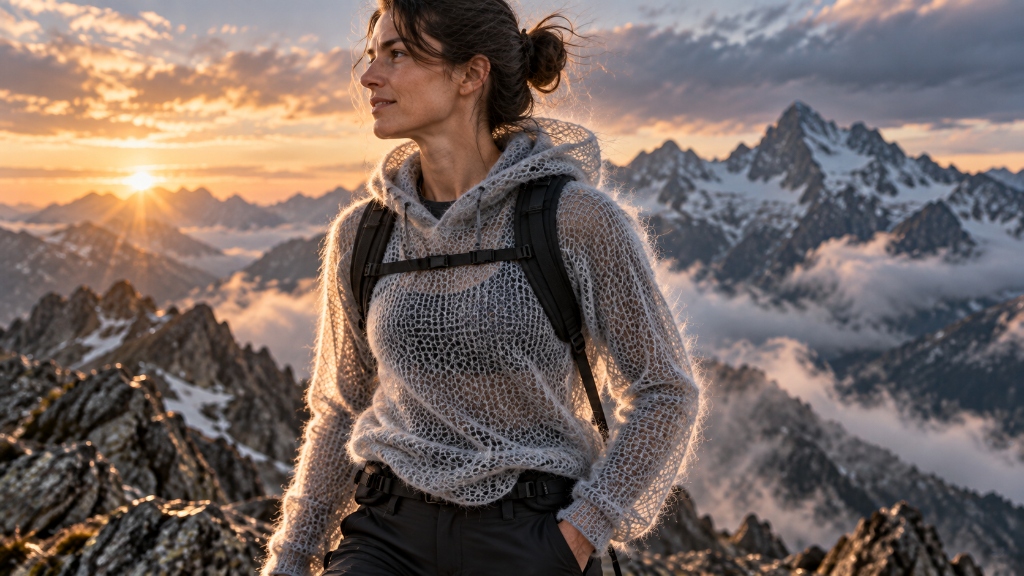
미군 특수작전사령부(SOCOM) 요청으로 탄생한 차세대 초경량 액티브 인슐레이션(Active Insulation)의 구조적 원리를 분석합니다.
 장비관리
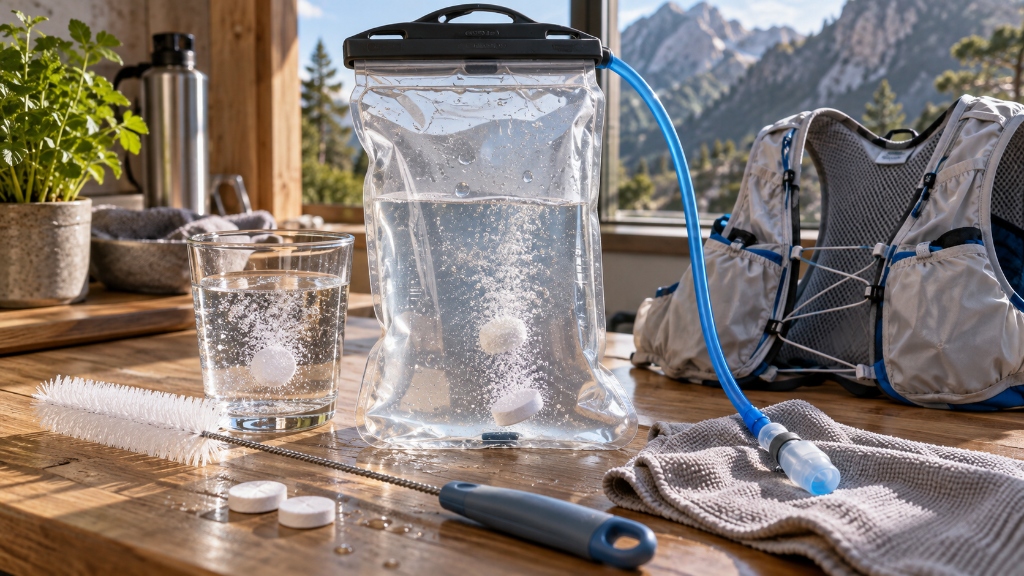
장비관리등산 조끼와 배낭용 수낭(하이드레이션 블래더) 호스 내부에 침과 잔수로 인해 발생하는 검은 곰팡이(바이오필름)의 위험성과 원인을 분석합니다.
Review 4-season rules, the 5:3:2 stamina law, interactive packing checklists, and 119 emergency rescue steps.