"Still Drinking Moldy Hose Water?": 0% Black Mold Effervescent Cleaning Formula for Hydration Bladders & Bite Valve Replacement
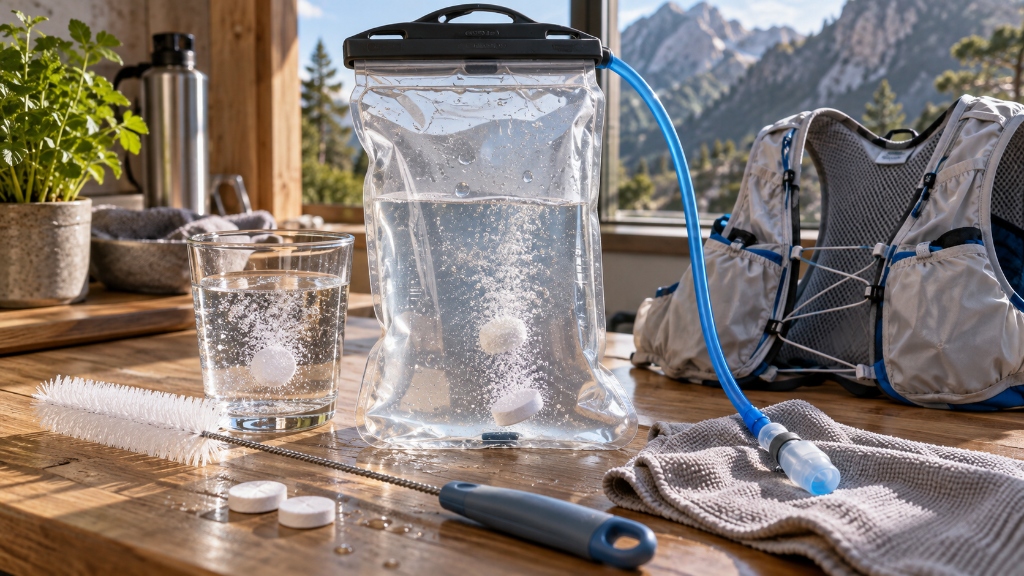
- 1Identifies why hiking hydration bladders and 1m drinking tubes develop black fungal biofilm within 48 hours due to saliva backflow and trapped moisture.
- 2Details a 10-minute 99.9% sterilization protocol using effervescent cleansing tablets to deep-clean narrow tubes without scratch-prone wire brushes.
- 3Reveals the stress-free 'Freezer Storage Hack' to eliminate mold growth forever, along with wear indicators for silicone bite valves and O-ring replacements.
1. [Sanitary Science] Why Drinking Tubes Cultivate Black Mold in 48 Hours
- Saliva Backflow & Trapped Moisture: When releasing the bite valve after sipping, micro-droplets of saliva and oral sugars draw back into the tube tip. Sealed at room temperature, this becomes a prime breeding ground for black fungal biofilm in under 48 hours.
- The Risk of Dish Soap Residue: Standard liquid detergents leave soapy residues inside narrow 1m tubes, locking in chemical tastes and causing nausea on trail days.
- The Chemistry of Effervescent Cleaning: Effervescent oxygen-bleach and enzymatic tablets create millions of micro-bubbles that chemically lift organic grime and sterilize narrow channels without abrasive scratching.
2. [Comparison Matrix] Maintenance Methods vs. Reservoir Longevity
| Maintenance Method | Tube Mold & Bacteria | Valve Odor & Staining | Expected Lifespan | Effort Level |
|---|---|---|---|---|
| Rinse with Tap Water & Air Dry | 🚨 Black mold appears in 3 days | Severe sour saliva odor & yellowing | 3-6 Months (Discarded in disgust) | Low effort, hazardous hygiene |
| Long Flexible Wire Brush | ⚠️ 80% removed (causes micro-abrasions) | Partial grime trapped in seams | 1-2 Years (Scratches harbor mold) | High effort & tedious |
| Effervescent Soak + Freezer Storage (Best) | ✨ 99.9% Sterile (0% mold) | Zero odor, 100% transparent clarity | 5+ Years (Semi-permanent) | 10-Minute effortless routine |
3. [Action Protocol] 10-Minute Deep Sterilization & Freezer Storage Hack
Dissolve 1-2 Cleansing Tablets in Lukewarm Water & Flush Tube (10-Min Soak)
Fill with lukewarm water (<40°C), drop in 1-2 effervescent tablets (or denture cleanser/citric acid), and pinch the bite valve to flush the active solution throughout the entire 1m tube length. Let sit for 10 minutes.
Detach Silicone Bite Valve, Lightly Brush Crevices, and Flush with Clean Water
Pinch and pull off the silicone bite valve cap to brush seam crevices, then fill the bladder with fresh water and flush completely 2-3 times through the tube.
Shake Off Excess Water & Place Directly into the Freezer (-18°C)
Never struggle trying to dry the narrow hose with hangers. Simply shake off excess droplets, seal the bladder and hose in a clean ziplock bag, and store directly in the freezer. Sub-zero temperatures physically halt all fungal and bacterial growth.
Common Rookie Mistakes & Proven Solutions
Smart Buyer's Guide: Trail Nutrition & Electrolyte Hydration
- •❌ Relying only on sugary candies (causes rapid blood sugar spikes and crashes)
- •❌ Chugging plain water while sweating heavily (causes hyponatremia and leg cramps)
Day hikers preventing dehydration and muscle fatigue
Endurance thru-hikers and long-distance ridgeline trekkers
- ✓🔍 25-30g carbs and 100-200mg sodium per energy packet
- ✓🔍 Isotonic stomach-friendly osmolarity formula
- ✓🔍 Easy-tear packaging operable with one hand or gloves
Essential Hiking & Trail Glossary
A self-sealing silicone mouthpiece that opens when bitten gently and automatically shuts to prevent drips when released.
A slimy extracellular matrix formed by trapped saliva, minerals, and bacteria inside the tube, serving as the incubator for black mold.
A push-button connector allowing the hose to snap on and off the reservoir body with a watertight auto-shutoff valve.
Thermoplastic Polyurethane, a high-durability, BPA-free flexible polymer used in premium hydration reservoirs.
Interactive Trail Safety Checklist
Tap each item before departing to verify readiness.
Generational Hiking Guide Series
Kids Trail Gamification & Scavenger Hunt
3 rules to turn early whining into joyful nature exploration
Couples Hiking Date & 10-Min Myth Guide
Pacing strategies, secret comfort gear, and scenic date peaks
4050 Spine Decompression & Fat Burn
Protecting lumbar discs while maximizing visceral fat loss
Hiking with Elderly Parents & Medical Kit
Barrier-free boardwalks, anti-shock poles, and medical safety