Sub-6.5 lb (2.8kg) Day-Hike Base Weight: Ultralight (UL) Pack Diet & Fast-and-Light System for Iconic Traverses
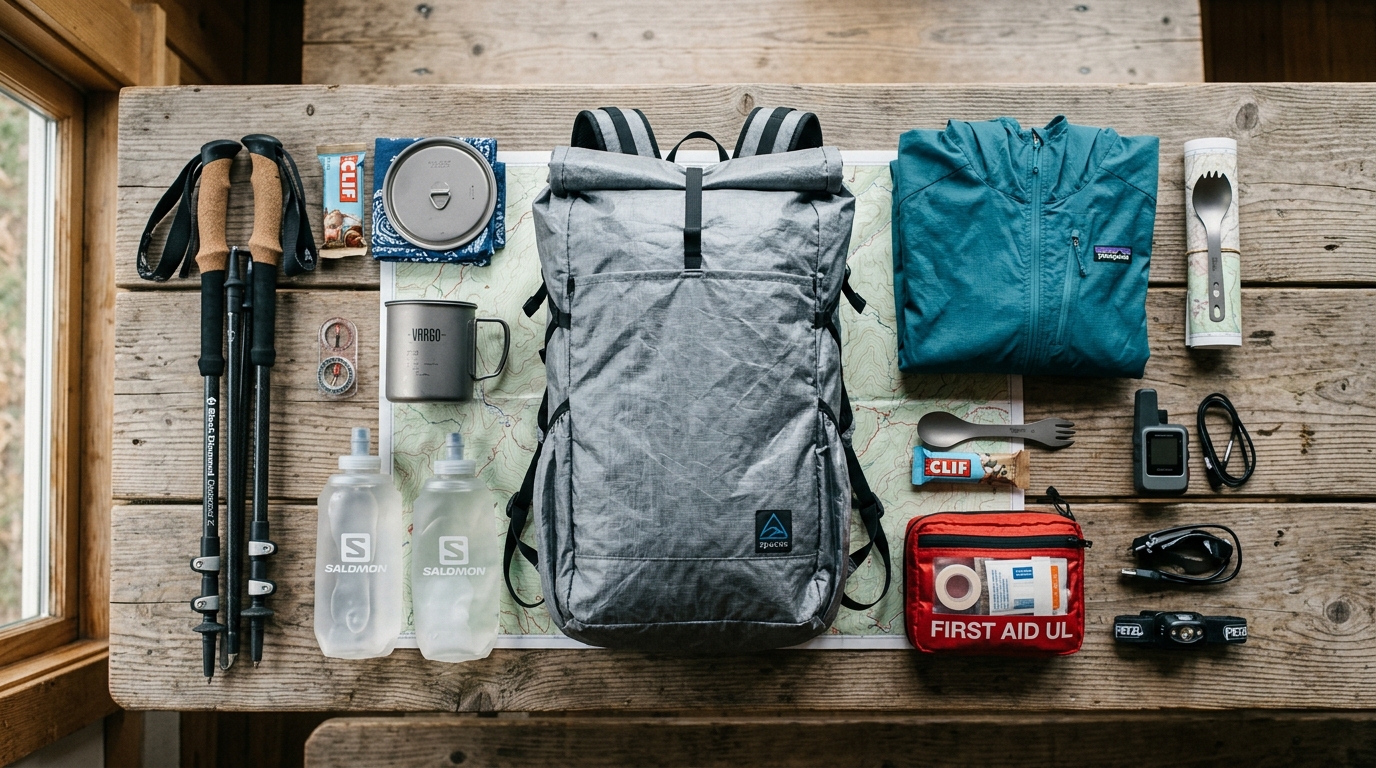
- 1Comprehensive fast-and-light packing framework for 15-25 mile day traverses (e.g. Mt. Whitney Day Hike, Presidential Traverse, TMB day stages) cutting joint fatigue by 40% while preserving 100% survival safety.
- 2Item-by-item comparative weight matrix: Standard Daypack (13.6 lbs / 6.2kg) vs UL Fastpack (6.1 lbs / 2.8kg), unlocking a 7.5 lb (3.4kg) base pack diet.
- 3Multi-use gear conversion formulas, the 4 non-negotiable alpine safety baselines, and a fail-proof pack diet checklist.
🎒 Backpack Weight (BPC) & Smart Packing Simulator
Scientifically calculates base pack weight (BPC), layering, and hydration based on trip & weather.
Safe 10% BPC Limit: 6.8kg
Under 8.5% body weight! Maximum stamina preservation and zero knee fatigue.
📋 Interactive Packing Checklist (Tap to Toggle)
8 / 21 itemsEvery 1kg shaved off your pack cuts cumulative descent knee impact by approx 8 tons. Plan resupply points to carry exactly what you need plus 300ml safety margin.
1. [Comparative Weight Matrix] Standard Daypack (13.6 lbs) vs UL Fastpack (6.1 lbs) Item-by-Item Breakdown
| Gear Category | Standard Setup (g / oz) | UL Fastpack Setup (g / oz) | Weight Saved | Key Diet Strategy |
|---|---|---|---|---|
| Pack Body (Backpack) | 1,450g (51 oz) - 30L internal frame with heavy hipbelt | 420g (15 oz) - 25L frameless DCF / Dyneema roll-top | -1,030g (-36 oz) | Eliminate heavy internal stays & bulky padding; embrace vest-style frameless carry |
| Insulation & Shell (Apparel) | 1,250g (44 oz) - Heavy fleece + 3-layer rigid hardshell | 480g (17 oz) - Polartec Alpha Direct 60 + 7D ultralight windshell | -770g (-27 oz) | Replace dense grid fleece with high-loft breathable active insulation and micro-ripstop windshell |
| Hydration & Filtration | 1,380g (48 oz) - Dual 1L Nalgene hard bottles + 2L reservoir | 380g (13 oz) - Dual 500ml soft flasks + Sawyer Squeeze filter | -1,000g (-35 oz) | Stop carrying dead water weight; filter on-trail via stream sources with ultra-compact hollow fiber filter |
| Emergency Shelter & Illumination | 620g (22 oz) - Full silnylon tarp + heavy multi-battery headlamp | 210g (7.4 oz) - SOL heat-reflective bivy sack (100g) + 45g USB-C headlamp | -410g (-14.6 oz) | Emergency bivouac bag capturing 90% body heat + 45g rechargeable high-lumen headlamp |
| Cookware & Food Prep | 580g (20 oz) - Cookset pot + canister stove + vacuum flask | 95g (3.3 oz) - 450ml single-wall titanium cup or cold-soak jar | -485g (-16.7 oz) | Skip stove systems for single-day endurance pushes; focus on dense no-cook fuel |
| First Aid & Hygiene Kit | 450g (16 oz) - Commercial hardcase first aid pouch | 120g (4.2 oz) - Ziploc micro-kit (gauze, K-tape, antiseptic, NSAIDs) | -330g (-11.8 oz) | Ditch hard cases and bulky packaging; precisely portion out critical emergency medical supplies |
| Total Base Weight (Excl. Consumables) | 6,180g (13.6 lbs) | 2,785g (6.1 lbs) | -3,395g (-7.5 lbs / 55% drop) | Achieve a sub-6.5 lb alpine fastpack baseline for effortless elevation gains |
2. ⚖️ The 4-Step UL Fastpack Diet Protocol
Weigh Every Item on a Digital Kitchen Scale (Gram-Level Precision)
Log every piece of gear in a spreadsheet (or LighterPack) down to the single gram or tenth of an ounce. Visualizing numeric data instantly exposes sneaky heavyweight offenders like oversized power banks or heavy multi-tools.
Eliminate 100% of 'Just-in-Case' Pack Clutter
Over 90% of 'just-in-case' items are never touched on trail. Except for non-negotiable safety margins (insulation, headlamp, first aid), ruthlessly eliminate backup changes of clothing, bulky knives, and extra tupperware.
Adopt the '1 Item, 3 Functions' Multi-Use Principle
Never carry single-purpose luxury items. Use a folding sit pad as the frameless backpack's virtual backframe, and use a merino neck gaiter as face warmth, sun protection, sweatband, and emergency compression wrap.
Waypoint-Mapped Micro Hydration Strategy
Never hike burdened by 3 liters (6.6 lbs) of stagnant water from the trailhead. Scout reliable alpine springs and water sources along the route, carrying only 1 liter in soft flasks and filtering on the fly.
3. 🎒 4 Master Multi-Use Conversions for Cutting Pack Bulk
- Buff / Merino Neck Gaiter: Serves as alpine ridge neck insulation, forehead sweatband, lens cleaning cloth, and instant emergency sprain compression wrap.
- SOL Emergency Bivy (100g / 3.5 oz): Acts as a life-saving heat-reflective shelter in sudden storms, ground moisture barrier for rest stops, and emergency windproof poncho.
- Collapsible Soft Flasks + Inline Filter (120g total): Replaces 300g rigid bottles; collapses flat when empty and eliminates the need to carry excess heavy water up steep vertical grades.
- Titanium 450ml Single-Wall Mug (55g / 1.9 oz): Functions seamlessly as a drinking vessel, snack bowl, measurement container, and emergency snow-melting pot.
4. 💡 4 Non-Negotiable Alpine Safety Baselines (Never Compromise)
- Pack an Ultralight Wind/Rain Shell Even in Clear Forecasts: Ridge weather is notoriously volatile; a 100g shell is your ultimate defense against hypothermia.
- A Dedicated Mini Headlamp is Mandatory (Never Rely on Smartphone Flashlights): Navigating technical talus or scrambles after dark requires both hands free and reliable lumen throw.
- Essential Trauma & Blister Medical Redundancy: Never omit sterile gauze pads, kinesiology tape, self-adhesive cohesive bandage, and emergency NSAID pain relievers.
- Reserve 500 kcal of Emergency High-Density Nutrition: Keep 1-2 energy bars untouched at the bottom of your pack until you safely return to the trailhead.
Common Rookie Mistakes & Proven Solutions
Smart Buyer's Guide: Ergonomic Backpack & Fit Systems
- •❌ Day packs without padded hip belts (forces 100% of load onto delicate shoulders)
- •❌ Overkill 50L+ heavy pack for standard single-day excursions
Day hikers on 3-6 hour regional trails
All-season summit baggers and hut-to-hut trekkers
- ✓🔍 Adjustable Torso Length system matching your back
- ✓🔍 Ergonomic hip belt capable of carrying 70% of pack weight on hips
- ✓🔍 Easily accessible hip-belt zip pockets and stretch water bottle holders
Interactive Trail Safety Checklist
Tap each item before departing to verify readiness.
Generational Hiking Guide Series
Kids Trail Gamification & Scavenger Hunt
3 rules to turn early whining into joyful nature exploration
Couples Hiking Date & 10-Min Myth Guide
Pacing strategies, secret comfort gear, and scenic date peaks
4050 Spine Decompression & Fat Burn
Protecting lumbar discs while maximizing visceral fat loss
Hiking with Elderly Parents & Medical Kit
Barrier-free boardwalks, anti-shock poles, and medical safety