Seasonal & WeatherLast Updated: 2026-09-11
Zero-Failure Sea of Clouds Meteorology: Inversion Layer Decoding, 85% Humidity & 2m/s Wind Rule
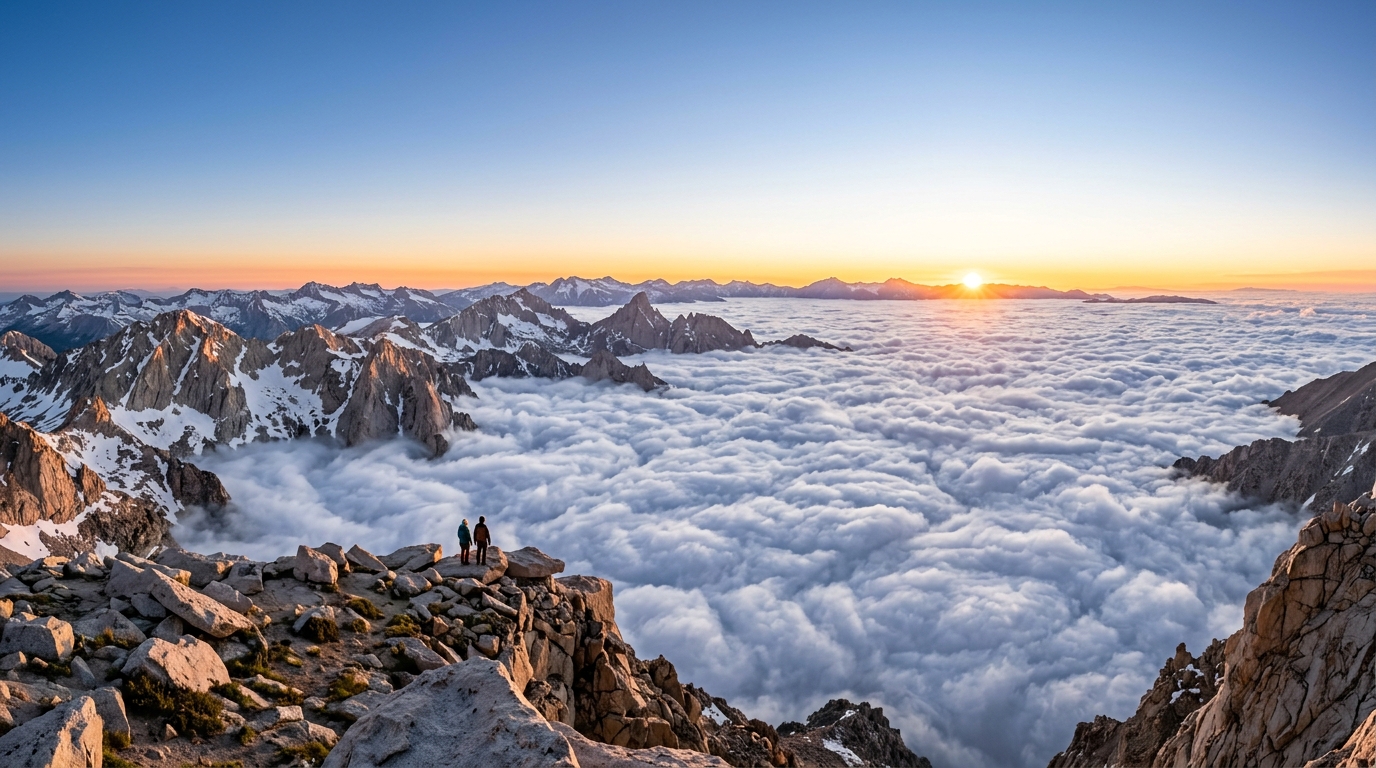
📷Zero-Failure Sea of Clouds Meteorology: Inversion Layer Decoding, 85% Humidity & 2m/s Wind Rule
Key Takeaways & Core Rules
- 1Thermodynamic breakdown of Temperature Inversion, deciphering the fine line between a zero-visibility fog trap and a majestic, golden Sea of Clouds.
- 2The 3 golden rules for 95% accurate prediction using standard weather apps: daily temp swing >= 10°C, dawn humidity >= 85%, and wind speed <= 2.0 m/s.
- 3Features top 5 Korean cloud-sea viewpoints (Cheonmasan, Oksunbong, Daedunsan, Hwangmaesan, Cheongoksan) and alpine start timing formulas.
#SeaOfClouds#TemperatureInversion#CloudSeaHunting#MountainMeteorology#AlpineSunrise#CloudInversion#LandscapePhotography#HikingWeatherGuide#KoreaMountainPeaks
Table of Contents
1. [Thermodynamic Analysis] Radiation Cooling & Inversion Trap: Fog vs Cloud Ocean2. [Comparison Matrix] Cloud Sea Hunt (GO) vs Stay Home (CANCEL) Weather Decision Matrix3. [Top 5 Peaks] Altitude-Specific Cloud Sea Viewpoints & Sunrise Timelines⚠️ Common Rookie Mistakes & Solutions🛍️ Buyer's Guide & Spec Checklist
1. [Thermodynamic Analysis] Radiation Cooling & Inversion Trap: Fog vs Cloud Ocean
- Radiational Cooling & Basin Fog: Clear night skies cause rapid terrestrial heat radiation to space, causing chilled dense air to sink into valleys and river basins to create thick radiation fog.
- Temperature Inversion Trap: While temperature normally decreases with altitude, an inversion layer forms a warm lid aloft, trapping low-level fog strictly beneath 300–700m.
- Breaking Above the Clouds: Ascending summits above 800m places hikers directly above the inversion lid, unveiling a breathtaking panoramic ocean of clouds undulating beneath their feet.
2. [Comparison Matrix] Cloud Sea Hunt (GO) vs Stay Home (CANCEL) Weather Decision Matrix
| Weather Parameter | 🚀 Cloud Sea Golden Signal (GO) | ❌ Zero-Visibility Risk (CANCEL) | Meteorological Principle |
|---|---|---|---|
| Precipitation Trend | Rain clearing up into a crystal clear night | Continuous rain or overcast all day | Ground requires saturated moisture followed by clear night skies for radiational cooling |
| Dawn Relative Humidity | 85% to 98% (03:00–06:00 AM) | Below 65% (Air too dry) | Near-saturation humidity is mandatory for ambient water vapor to condense into fog |
| Surface/Ridge Wind Speed | 0.5 m/s to 2.0 m/s (Calm or light breeze) | Above 4.0 m/s (Moderate to strong breeze) | High winds disperse condensed fog droplets or push clouds up over ridges |
| Diurnal Temp Range | Temp swing of 10°C to 15°C+ | Temp swing under 5°C | Larger temperature swings accelerate rapid ground-level condensation |
| Dawn Cloud Cover | Clear skies (0 to 20% cloud cover) | Overcast mid/high clouds (80% to 100%) | Cloudy skies act like an insulating blanket, blocking radiative heat loss |
3. [Top 5 Peaks] Altitude-Specific Cloud Sea Viewpoints & Sunrise Timelines
- Namyangju Cheonmasan (812m): Han River vapor fills the valley basin, generating the Seoul Capital Area’s premier carpet cloud sea. Arrive 40 min before dawn.
- Danyang Oksunbong & Gudambong (286–330m): Prime lake-effect cloud sea rising directly from Chungju Lake. Highly accessible for beginners.
- Wanju Daedunsan (878m): Jagged granite pinnacles rising like mystical islands above a sea of clouds.
- Hapcheon Hwangmaesan (1,113m): Expansive silver grass plateaus overlooking massive wave-like alpine cloud seas with drive-up trailheads.
- Pyeongchang Cheongoksan Yukbaekmajigi (1,256m): High-altitude highland plateau with windmills and 360-degree panoramic sunrise cloud oceans.
Common Rookie Mistakes & Proven Solutions
Mistake 1Heading up during active rain expecting dramatic fog scenery
⚠️ Potential Hazard:Trapped in 5-meter visibility dense cloud mist with severe hypothermia and slip hazards
💡 Recommended Solution:Target the dawn immediately following the clearing of rain when cold air rapidly settles.
Mistake 2Arriving at the summit exactly at the official sunrise minute
⚠️ Potential Hazard:Cloud seas reach peak magenta intensity during dawn twilight (30 min before sunrise); clouds evaporate 30 min after sunrise
💡 Recommended Solution:Reach the vantage point 30–40 minutes before sunrise to set up tripods and capture the golden dawn glow.
Smart Buyer's Guide: Emergency Safety & Essential Gear
Avoid These Products (Traps & Wasted Money)
- •❌ Relying solely on smartphone flashlight (drains battery and occupies hands)
- •❌ Pea-whistles with moving balls (freezes or jams with moisture during emergencies)
Recommended Specs & Price Matrix by Experience Level
Beginner Budget ($15~$30)
120dB Pealess Survival Whistle + Mylar Emergency Space Blanket + Compact First Aid Kit
Essential safety setup for every day hiker
Budget:$15~$30
Intermediate Pro ($40~$90)
300+ Lumen ANSI Rated USB-C Headlamp (IPX4 Waterproof) + 5,000mAh Compact Power Bank
Sunrise/sunset chasers and all-season mountain trekkers
Budget:$40~$90
🔍 Pre-Purchase Spec Checkpoints
- ✓🔍 Headlamp with verified ANSI-FL1 lumen and runtime ratings
- ✓🔍 Pealess high-decibel whistle operable in wet/freezing conditions
- ✓🔍 Tear-resistant aluminum emergency thermal blanket (sub-50g)
Recommended Search Terms:
🔍 Hiking LED Headlamp🔍 Pealess Survival Whistle🔍 Emergency Space Blanket🔍 First Aid KitEssential Hiking & Trail Glossary
Temperature Inversion
An atmospheric condition where air temperature increases with altitude, trapping dense cold fog beneath a warm upper layer
Radiation Fog
Dense fog formed near the ground on calm, clear nights as terrestrial heat radiates into space and cools surface air to its dew point
Interactive Trail Safety Checklist
Tap each item before departing to verify readiness.
⚠️ Initial Phase (Review Needed)(0%)
Completed Items0 / 5
Frequently Asked Questions (FAQ)
A.The inversion layer is temporarily hovering slightly above the summit. As the sun rises between 07:00 and 08:00, surface warming often forces the cloud top to drop 200–300m rapidly, unveiling a dramatic cloud sea. Wait 30 minutes before giving up!
Generational Hiking Guide Series
🌱 Kids & Family
Kids Trail Gamification & Scavenger Hunt
3 rules to turn early whining into joyful nature exploration
View Guide
🔥 Young & Couples
Couples Hiking Date & 10-Min Myth Guide
Pacing strategies, secret comfort gear, and scenic date peaks
View Guide
💪 4050 Middle-Aged
4050 Spine Decompression & Fat Burn
Protecting lumbar discs while maximizing visceral fat loss
View Guide
🌲 6070 Seniors
Hiking with Elderly Parents & Medical Kit
Barrier-free boardwalks, anti-shock poles, and medical safety
View Guide
Related Hiking Guides
View All Guides →Gear Guide
"Your Standard Watch Will Die on Mount Seorak!" 4 Dedicated Hiking Smartwatch Brands [Garmin vs Suunto vs Coros vs Apple/Galaxy Ultra] & Offline GPX Navigation Guide
Read Guide
New Tech/Exoskeleton
“Instantly Shed 30kg of Pack Weight?” Wearable Robotic Exoskeletons & Outdoor Walking Assist Tech Guide
Read Guide
Fitness/Spine Health
“Severe Back Pain & Stubborn Belly Fat After Hiking?” The 4050 Spine Decompression & Zone 2 Fat-Burn Guide
Read Guide