Do Pharmacy Knee Braces Harm Cartilage? Sleeve vs Hinged vs Patellar Strap Biomechanics & Decompression Formula
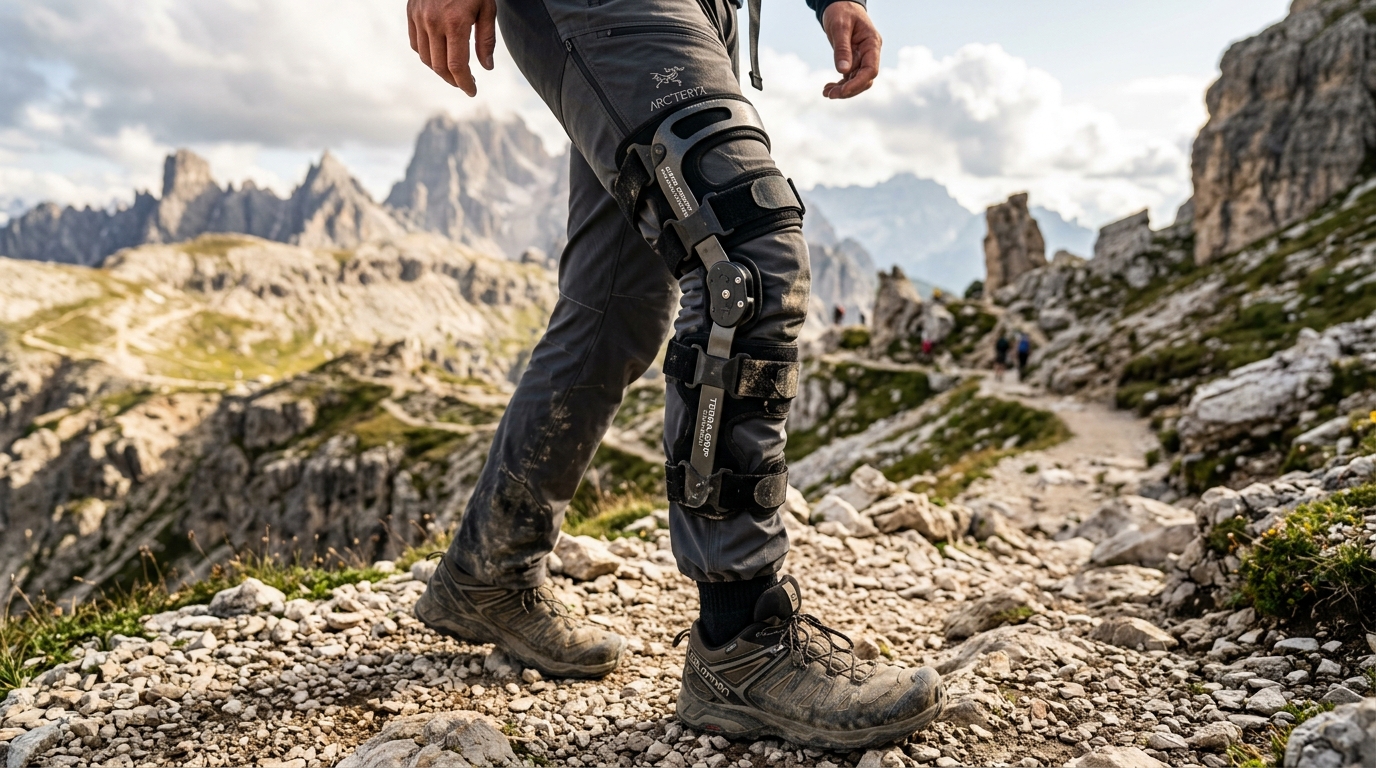
- 1Biomechanical analysis of downhill knee loading (3-5x body weight) and the hidden vascular pitfalls of excessively tight elastic compression bands.
- 2Comprehensive comparison of Elastic Sleeves (warmth & proprioception), Hinged Stabilizers (rigid lateral support for rough alpine descents), and Patellar Tendon Straps.
- 3Master the pro mountaineer timing formula: pack braces away during uphill climbs to prevent muscle atrophy, and strap in strictly 10 minutes before descending.
1. [Biomechanical Analysis] Why Constrictive Compression Braces Cause Rebound Knee Damage
- Vascular Strangulation & Quads Pump Inhibition: Wearing non-adjustable, overly tight sleeves all day compresses the popliteal artery behind the knee, choking venous return and paralyzing the natural shock-absorbing pump of the quadriceps.
- Ligament Atrophy from Over-Reliance: Relying on rigid external bracing during uphill climbs deprives stabilizing joint muscles of adaptive loading, accelerating cartilage wear once the brace is removed.
- The Golden Rule of Descent-Only Bracing: Leave braces in your pack during uphill ascents to activate active muscle firing, and equip them strictly prior to downhill descent when peak joint impact strikes.
2. [Comparison Matrix] 3 Primary Mountain Knee Brace Types & Terrain Matrix
| Brace Architecture | Biomechanical Mechanism | Cartilage Load Relief | Optimal Terrain & Target Condition |
|---|---|---|---|
| 1. Elastic Sleeve (Knit) | Circumferential compression + silicone ring | ⭐⭐⭐ (~15% to 20% relief) | Gentle rolling trails, joint warmth, mild knee wobbling |
| 2. Hinged Stabilizer (Dual Metal) | Dual aluminum/spring lateral hinges | ⭐⭐⭐⭐⭐ (~35% to 45% relief) | Rough rocky boulder descents (Bukhansan/Seoraksan), history of ACL or meniscus tear |
| 3. Patellar Tendon Strap | Targeted sub-patellar tubular pressure | ⭐⭐⭐⭐ (40% localized patellar relief) | Sharp anterior pain below kneecap (Jumper’s Knee, runner's knee, steep stair descents) |
3. [Pro Setup Guide] 3-Step Non-Slip Lock-In Configuration
Patella Donut Ring Alignment
Position the central open silicone ring so that your patella (kneecap) sits precisely and comfortably in the anatomical cutout.
Direct Bare-Skin Contact
Never strap braces over slick hiking pants as fabric friction causes immediate downward migration; apply directly to bare skin or use silicone anti-slip grips.
Bottom-to-Top Strap Fastening
Secure the lower calf strap firmly first to create a shelf above the calf muscle belly, then fasten the upper thigh strap to prevent downhill slippage.
Common Rookie Mistakes & Proven Solutions
Smart Buyer's Guide: Knee Braces & Kinesiology Taping
- •❌ Tight tube-shaped elastic sleeves that choke blood circulation and weaken quads
- •❌ Cheap low-grade tapes that peel off after 10 minutes of sweating
Hikers experiencing early descent knee fatigue
Long-distance and steep terrain peak baggers
- ✓🔍 Easy wrap-around design (wear without taking off boots)
- ✓🔍 Built-in open patella silicone cushion for kneecap pressure relief
- ✓🔍 Sweat-wicking breathable neoprene or mesh fabric
Essential Hiking & Trail Glossary
An overuse condition characterized by dull, aching pain under or around the kneecap exacerbated by repetitive downhill hiking shock
A rigid or semi-rigid knee support incorporating lateral metal pivots to prevent rotational twisting and hyperextension under heavy pack loads
Interactive Trail Safety Checklist
Tap each item before departing to verify readiness.
Generational Hiking Guide Series
Kids Trail Gamification & Scavenger Hunt
3 rules to turn early whining into joyful nature exploration
Couples Hiking Date & 10-Min Myth Guide
Pacing strategies, secret comfort gear, and scenic date peaks
4050 Spine Decompression & Fat Burn
Protecting lumbar discs while maximizing visceral fat loss
Hiking with Elderly Parents & Medical Kit
Barrier-free boardwalks, anti-shock poles, and medical safety